
When you think of Dubai, a city defined by glass towers and luxury, but also a place with deep roots in desert trade and pearl diving. Also known as the UAE’s cultural heart, it’s easy to miss how much of its identity was shaped long before the Burj Khalifa touched the sky. The real Dubai didn’t start with skyscrapers—it began with wind towers catching desert breezes, fishermen hauling pearls at dawn, and merchants trading spices under shaded courtyards. These aren’t just old buildings. They’re living proof of how people lived, worked, and survived in one of the harshest environments on Earth.
Walk into Al Fahidi Historical Neighbourhood, Dubai’s oldest preserved district, where traditional wind towers and coral-stone houses still stand. Also known as Al Bastakiya, it’s where you’ll find the Dubai Museum tucked inside the 1787 Al Fahidi Fort—the city’s first defensive structure. This isn’t a museum with glass cases and audio guides. It’s a space that holds the scent of oud, the echo of Bedouin songs, and the quiet pride of families who never left. Nearby, the Dubai Creek, the natural waterway that turned Dubai into a trading hub over 200 years ago. Also known as the artery of old Dubai, it’s still alive with abra boats shuttling people across, just like they did in the 1950s. You can touch the same wooden piers where merchants once counted pearls, and still feel the rhythm of a city built on grit, not just gold.
Don’t overlook the smaller spots—the old souks, the single-room homes turned into heritage cafes, the wind towers still cooling interiors without electricity. These aren’t preserved for tourists. They’re kept alive by locals who remember when air conditioning was a luxury and the sea was the only highway. The Dubai Coffee House, a tiny café in Al Fahidi where men still gather for cardamom coffee and stories. Also known as a living archive, it’s where elders debate the city’s changes while young people snap photos of the same walls their grandparents sat against. This is heritage not as a postcard, but as a pulse.
You won’t find these places on most tourist maps. But if you want to understand why Dubai doesn’t just dazzle—it endures—you need to see them. The contrast is stark: one side of the creek has billion-dollar towers, the other has families cooking shawarma over charcoal in the same spot their grandfathers did. Neither is more real than the other. They’re both part of the same story.
What follows isn’t a list of must-see sights. It’s a collection of stories from people who’ve lived them—how the old forts became museums, how the creek’s traders became hotel owners, how a single wind tower still works better than any AC unit in summer. These posts don’t just show you landmarks. They show you the hands that built them, the voices that kept them alive, and the quiet moments that still echo in the alleys of old Dubai.
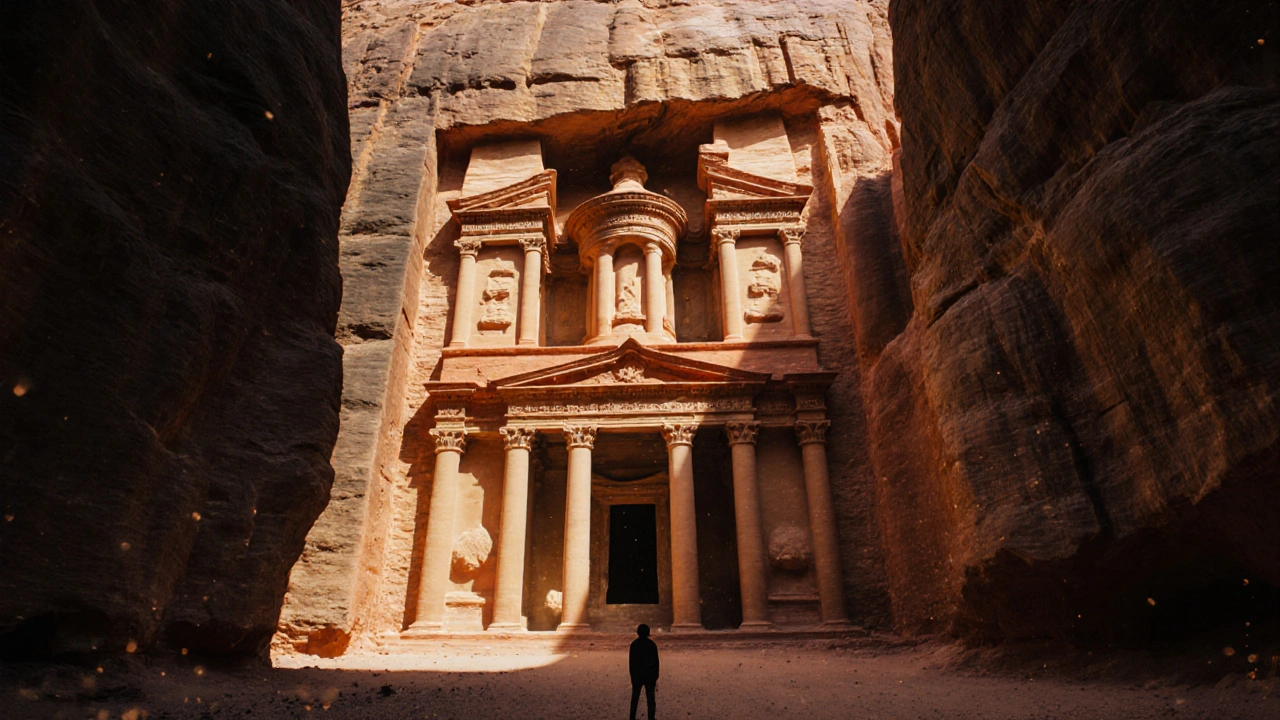
Explore the raw, soul-stirring power of ancient architectural wonders-from Petra to Angkor Wat-and discover why these sites deliver a deeper, lasting high than any modern luxury.
Nov, 24 2025

May, 27 2025
Jun, 1 2025

Apr, 12 2025
Feb, 22 2025