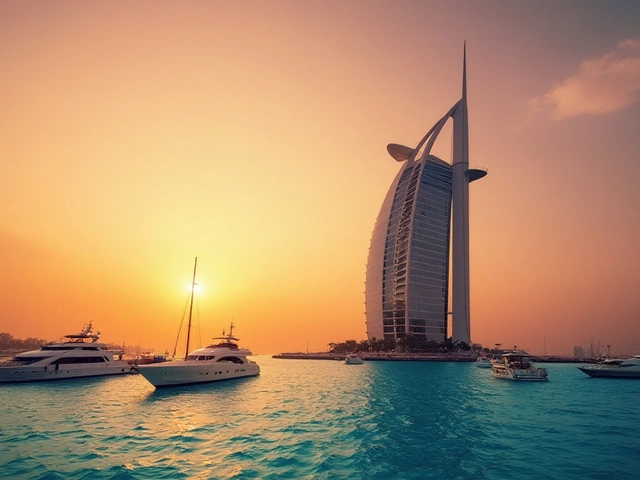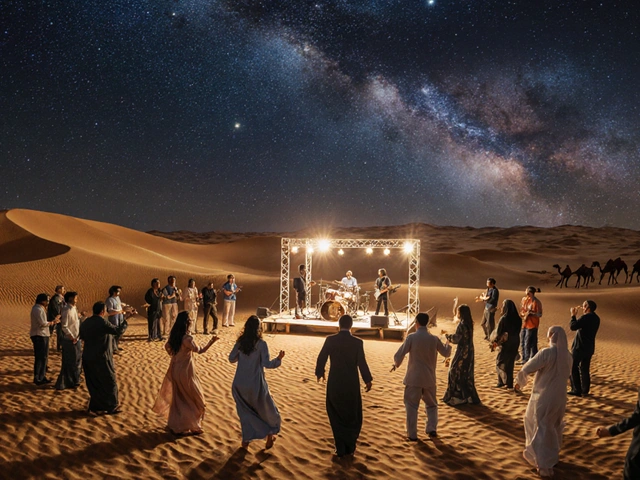
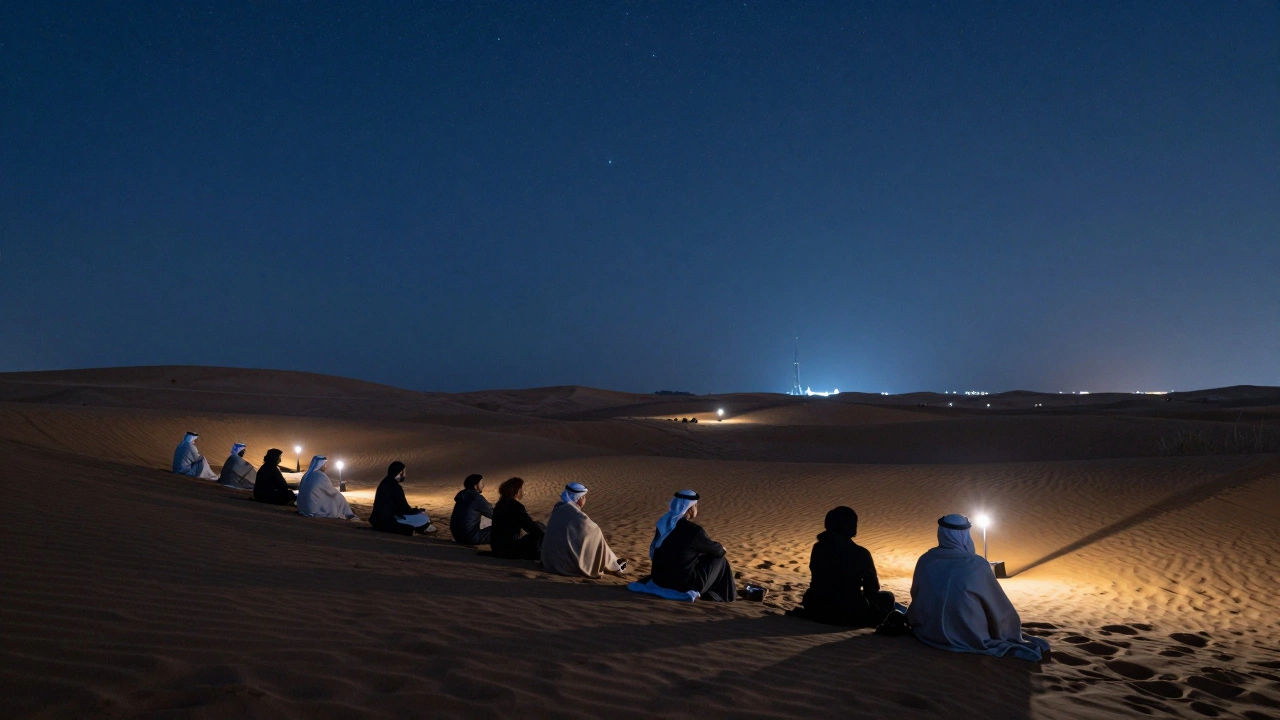
In Dubai, the skyline glows with laser shows over the Burj Khalifa, desert dunes come alive with music under the stars at Al Marmoom, and the Dubai Shopping Festival draws millions every winter. But these aren’t just modern attractions - they’re the latest chapter in a global story of human beings coming together to celebrate, perform, and witness the extraordinary. The history of iconic entertainment events around the world isn’t just about concerts or parades. It’s about identity, survival, ritual, and joy - and Dubai has woven itself into that story in ways few cities have.
From Ancient Rituals to Modern Spectacles
Long before neon lights and drone shows, entertainment was tied to survival. In ancient Egypt, the Nile’s flooding was marked with festivals honoring Hapi, the god of the inundation. In Mesopotamia, the Akitu New Year festival lasted 11 days, blending religious rites with public theater and chariot races. These weren’t just parties - they were social glue, reinforcing order, hierarchy, and shared belief.
Fast forward to 1896, and the modern Olympic Games were revived in Athens. Not just a sports event, but a global ritual of unity - a response to war and division. The same spirit lives today in events like the Rio Carnival, where over two million people flood the streets each year, turning music and movement into a defiant celebration of culture. In Dubai, you see echoes of this in the Dubai World Cup, where horse racing isn’t just about speed - it’s about heritage, prestige, and the deep-rooted Bedouin tradition of camel and horse breeding that still thrives in the UAE’s desert regions.
Dubai’s Own Evolution: From Bedouin Gatherings to Global Stages
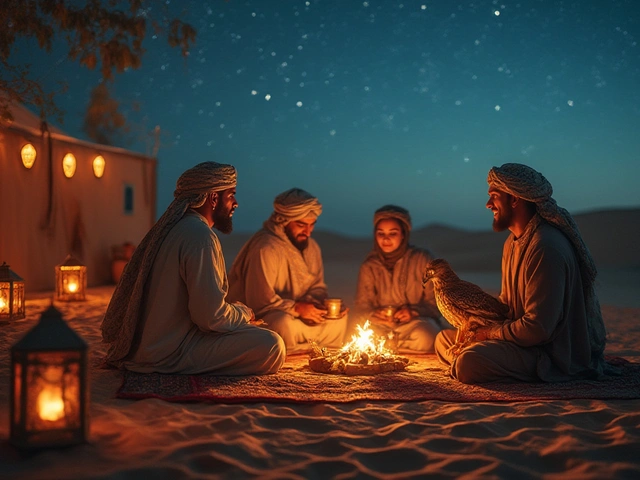
Dubai’s entertainment scene didn’t start with Burj Al Arab or IMG Worlds of Adventure. It began with Bedouin storytelling under the stars, where poetry, drumming, and falconry were the main attractions. The majlis - the traditional gathering space - was the original venue for communal entertainment. Today, that spirit survives in places like Alserkal Avenue, where local artists host open mic nights and pop-up performances in converted warehouses, keeping the oral tradition alive.
The real transformation came in the 1990s, when Dubai’s leaders began investing in large-scale events to attract global attention. The Dubai Shopping Festival launched in 1996 - not just a sale, but a month-long carnival with fireworks over the Dubai Creek, live concerts at the Dubai Festival City, and even camel beauty contests. It was a bold move: turning commerce into culture. By 2005, the Dubai Desert Classic golf tournament brought in PGA stars, and suddenly, the dunes weren’t just for desert safaris - they were part of a world-class sports calendar.
By 2010, the Dubai International Film Festival turned the city into a hub for Arab cinema, and in 2018, the Dubai Expo showcased the future of entertainment through immersive tech - holograms, AI-driven art, and interactive pavilions from over 190 nations. Dubai didn’t just host events; it redefined what an entertainment destination could be.
Global Icons: What Makes an Event Truly Iconic?
What separates a local fair from a global phenomenon? Three things: scale, repetition, and emotional resonance.
The Notting Hill Carnival in London - started by Caribbean migrants in 1966 - is now Europe’s largest street festival. It’s not just steel drums and costumes; it’s a living archive of diaspora identity. Similarly, the Rio Carnival isn’t just about samba schools - it’s a 500-year-old fusion of African rhythms, Portuguese traditions, and Brazilian pride.
In Japan, the Gion Matsuri in Kyoto dates back to 869 AD. It began as a religious ritual to appease gods during plague, and now it features 30 massive floats pulled through the city by thousands. The event has survived wars, earthquakes, and pandemics - because it’s not about tourism. It’s about belonging.
Dubai’s version? The Dubai Frame’s annual Light Festival, where the entire structure becomes a canvas for projections telling stories of Emirati heritage - from pearl diving to space ambitions. It’s not the biggest light show in the world, but it’s uniquely tied to the UAE’s rapid transformation. That’s what makes it iconic: it doesn’t copy the past - it reimagines it.
Why Dubai Stands Out in the Global Entertainment Landscape
Most cities host events. Dubai builds ecosystems around them. The city doesn’t just bring in the Rolling Stones for a concert - it partners with Dubai Culture to host workshops with local musicians. It doesn’t just host the F1 Grand Prix - it launches youth engineering challenges in schools months before the race.
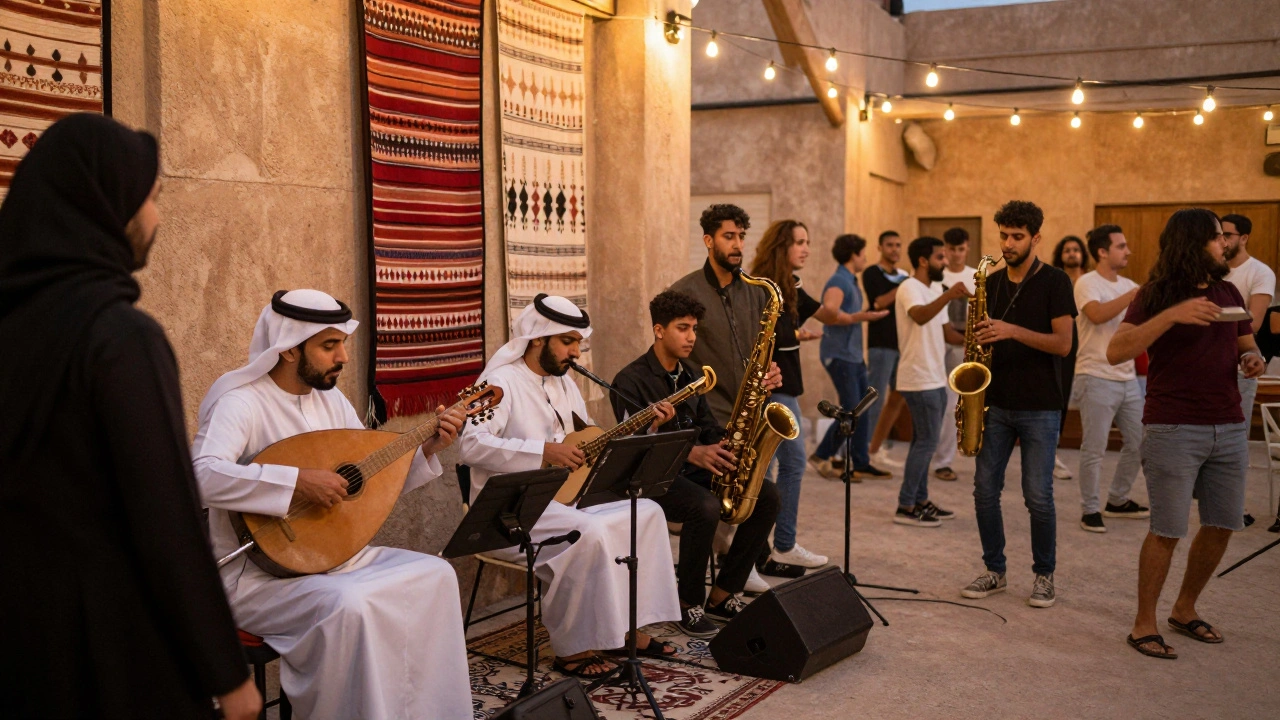
Take the Dubai International Jazz Festival. It’s not just a lineup of international artists. It’s a platform for Emirati jazz bands, Arabic fusion ensembles, and even oud players collaborating with saxophonists. The result? A sound that’s neither Western nor Middle Eastern - but distinctly Dubai.
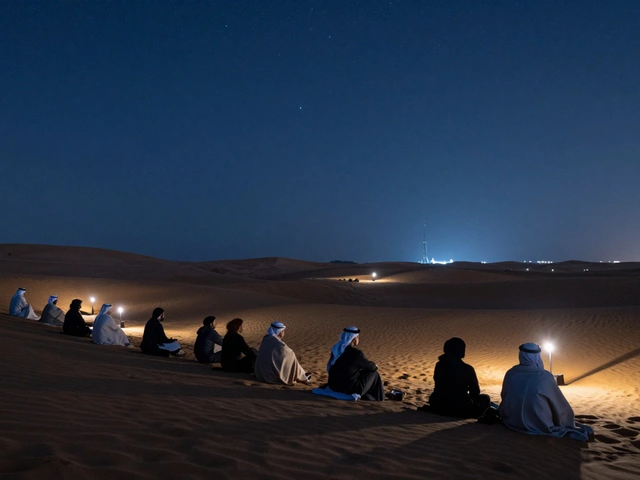
And then there’s the Al Marmoom Desert Conservation Reserve. Every December, it becomes the site of the Desert Sound Festival - a quiet, immersive experience where ambient music plays under the stars, with no crowds, no neon, just dunes and silence. It’s the opposite of Times Square on New Year’s Eve - and yet, just as powerful. It speaks to a deeper truth: in a city known for excess, some of its most meaningful events are the ones that strip everything away.
The Role of Tradition in Modern Celebrations
Dubai’s success isn’t just about spending money. It’s about respecting roots. The UAE National Day on December 2nd is a perfect example. It’s not just fireworks over the Palm. It’s schoolchildren wearing traditional kanduras and abayas, performing folk dances like the Ayyala, and reciting poetry in Arabic. The government doesn’t just fund the event - it ensures every Emirati family knows its meaning.
Compare that to other global events where cultural appropriation is common. At some international festivals, traditional costumes are worn as costumes - not as heritage. In Dubai, you’ll see Emirati women leading workshops on how to weave a sadu pattern, or Emirati chefs teaching how to make balaleet, the sweet vermicelli dish served on National Day. The line between performance and preservation is blurred - and that’s intentional.
This is why the Dubai Shopping Festival still includes traditional Emirati markets (souks) alongside luxury brand pop-ups. It’s not a gimmick - it’s a statement: modernity doesn’t erase history. It builds on it.
What’s Next for Dubai’s Entertainment Scene?
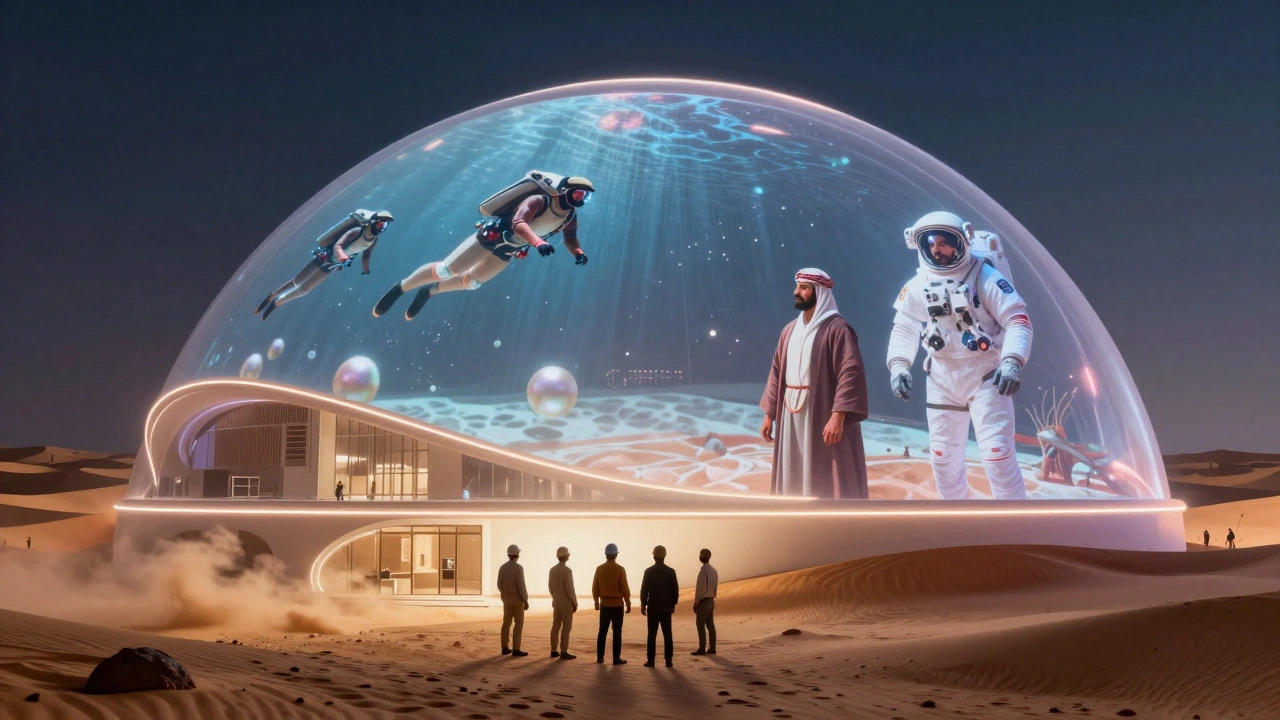
Dubai is already planning its next leap. The Dubai Entertainment City project, set to open in 2027, will include a 300-meter-tall immersive dome where visitors can experience historical events - from the Silk Road to the moon landing - in 360-degree, multi-sensory environments. It’s not a theme park. It’s a time machine.
And the city is doubling down on sustainability. The upcoming Dubai Green Festival will feature zero-waste concerts, solar-powered stages, and food stalls using only local, organic produce. Even the fireworks are being replaced by drone light shows powered by renewable energy - a nod to the UAE’s commitment to clean tech.
Meanwhile, the Dubai Culture Authority is working with rural communities to document oral histories of Bedouin storytelling, turning them into digital archives. These aren’t just museum pieces - they’re being turned into interactive theater experiences for schools and tourists.
Dubai’s entertainment future isn’t about bigger, louder, faster. It’s about deeper, smarter, more meaningful.
How to Experience Dubai’s Entertainment Legacy - Locally
If you’re in Dubai and want to feel the real pulse of its entertainment history, skip the mega-events for a moment. Try this:
- Visit the Dubai Heritage Village on Al Shindagha Street - watch artisans weave baskets, make oud instruments, and demonstrate traditional coffee brewing.
- Go to the Alserkal Avenue on a Friday night - find a hidden poetry slam or experimental film screening in a converted factory.
- Attend the Al Marmoom Desert Sound Festival in December - bring a blanket, turn off your phone, and listen to the silence between the notes.
- Join a local Emirati family for a National Day dinner - ask them to tell you about their grandfather’s pearl diving days. You’ll hear more than a story - you’ll hear history.
Dubai’s entertainment isn’t just something you watch. It’s something you step into - and if you’re lucky, become part of.
What makes Dubai’s entertainment events different from those in other global cities?
Dubai’s events blend global scale with deep local roots. While cities like Paris or New York host events rooted in centuries of Western tradition, Dubai fuses Bedouin heritage, Islamic culture, and futuristic ambition. You won’t find a single festival in Dubai that doesn’t include Emirati music, food, or storytelling - even when the headliner is a global pop star. It’s not about imitation - it’s about integration.
Are Dubai’s entertainment events family-friendly?
Absolutely. Unlike some global festivals that focus on nightlife or adult themes, Dubai’s major events - from the Dubai Shopping Festival to the National Day celebrations - are designed for all ages. You’ll find kids’ zones with traditional games, cultural workshops for teens, and quiet spaces for elders. Even the desert festivals have shaded family areas and Arabic storytelling tents. The city prioritizes inclusive entertainment.
Can tourists participate in traditional Emirati entertainment events?
Yes - and they’re encouraged to. At events like the Dubai Camel Race Festival, visitors can watch training sessions, learn about camel care, and even take photos with trained camels. During National Day, many public spaces offer free traditional attire rentals so tourists can join in the dancing. The key is respect: ask before taking photos of people, dress modestly in heritage zones, and always say “shukran” (thank you).
What’s the best time of year to experience Dubai’s top entertainment events?
October to March is ideal - cooler weather makes outdoor events comfortable. The Dubai Shopping Festival runs from December to January, the Dubai Desert Classic is in February, and the Dubai International Film Festival is usually in December. For something quieter, the Al Marmoom Desert Sound Festival happens in early December. Avoid July and August - temperatures can hit 45°C, and most large events pause during peak summer.
How has Dubai’s entertainment scene changed since 2010?
Before 2010, Dubai’s events were mostly imported - think Hollywood premieres or European music festivals. Since then, the city has shifted to producing original content. The Dubai Expo 2020 introduced AI-driven art, and now local artists lead major festivals. The focus moved from attracting tourists to building cultural identity. Today, you’ll find more Emirati-led performances than ever - and they’re drawing global audiences because they feel authentic, not staged.
What started as desert gatherings under the stars has become a global model for how culture, technology, and tradition can coexist. In Dubai, entertainment isn’t just a pastime - it’s a way of remembering who you are, even as you race toward the future.