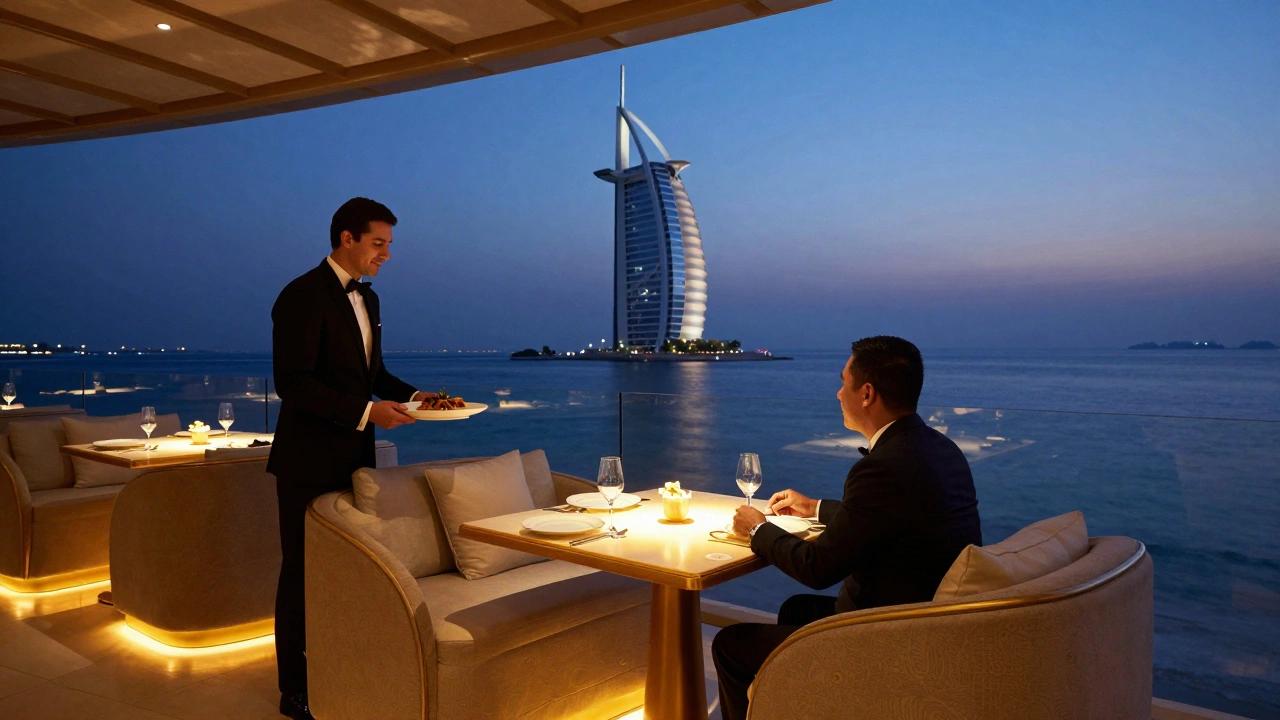
There’s only one place on Earth where your dinner costs more than your hotel room-and it’s not even a restaurant. It’s a theater disguised as a meal. And if you’re asking what the only 7-star restaurant in the world is, you already know the answer: it’s the Burj Al Arab is a sail-shaped luxury hotel in Dubai that serves the world’s only officially recognized 7-star dining experience. Also known as The Burj, it opened in 1999 and redefined what ‘luxury’ even means.
What the hell is a 7-star restaurant?
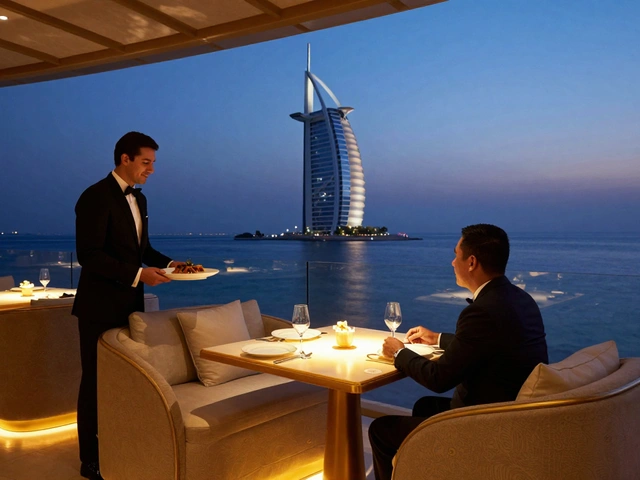
Let’s get real. There’s no such thing as a 7-star rating system. The stars were invented by hotel guides, not Michelin. But Burj Al Arab? They slapped on the ‘7-star’ label back in the 90s when they realized 5 stars wasn’t enough to scare people into paying $2,000 a night just to take a shower. And guess what? It worked. Now, the restaurant inside it-Al Muntaha is a fine-dining restaurant perched 200 meters above the Persian Gulf at the Burj Al Arab, offering panoramic views and a menu designed by a Michelin-starred chef.-is the only place on Earth where you’re not just eating. You’re being curated.
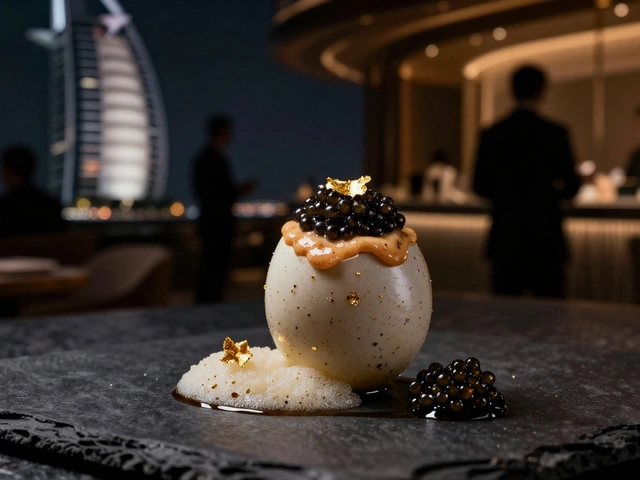
Think of it like this: you don’t go to Al Muntaha for the food. You go because you want to feel like the last man on Earth who still has access to the vault of the gods. The menu changes every season. Last month, it was truffle-infused caviar with gold leaf, served on a plate that cost more than your iPhone. The wine list? Over 1,200 bottles. The cheapest glass? $250. The most expensive? $15,000 for a 1945 Romanée-Conti. Yeah, you read that right.
How do you even get a table?
You don’t just book it on OpenTable. You don’t DM the host on Instagram. You don’t even call the front desk. You need a reservation agent. Yes, that’s a real thing. Dubai’s elite hire concierges who have direct lines to the Burj’s private dining team. These aren’t your average hotel staff. These are ex-military, ex-FBIs, ex-royal household managers who know how to make billionaires disappear for a night.
Here’s how it works: you need to book at least 30 days in advance. Walk-ins? Forget it. Even if you’re staying at the Burj, you still need to clear a security check just to get to the elevator. They scan your ID, your credit card, your LinkedIn profile. They want to know you’re not some dude who just got a bonus and thinks he’s entitled to caviar.
And the dress code? No suits. No ties. No sneakers. You wear black tie. Or you don’t get in. I saw a guy in a hoodie last year. Security didn’t say a word. They just smiled. Then two guys in tailored tuxedos walked him out like he’d just tried to rob a bank. He didn’t even make it past the lobby.
Why is this the only one that matters?
Because it’s not about taste. It’s about presence. You don’t eat here to satisfy hunger. You eat here to erase doubt. To prove to yourself that you’re not just rich-you’re chosen.
I’ve eaten at Noma in Copenhagen. I’ve had a 10-course tasting menu at Eleven Madison Park in New York. I’ve even dined in a private cave in Kyoto where the chef whispered prayers before each dish. But none of them made me feel like I was floating.
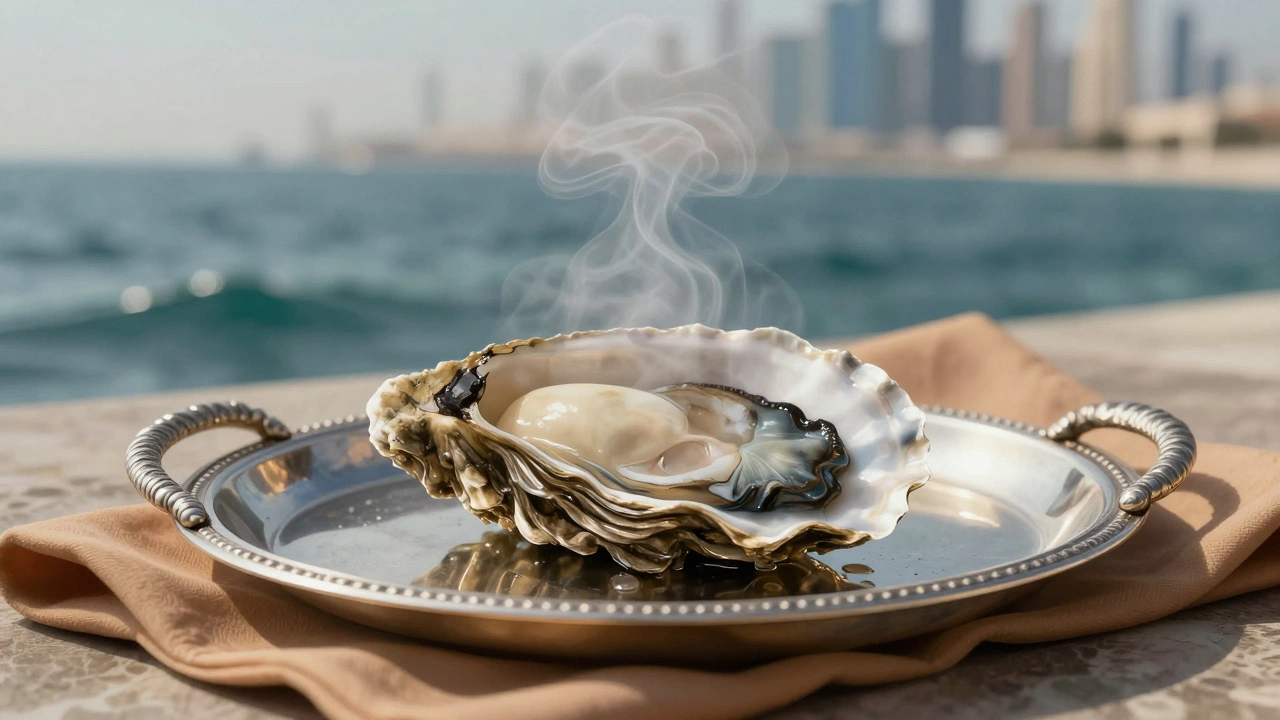
At Al Muntaha, you’re seated in a private booth that looks like it was carved out of a cloud. The table is lit from below with LED that shifts color based on your wine pairing. The waiters don’t serve you-they present. One guy came out with a silver tray holding a single oyster. He didn’t say a word. He just bowed. Then he placed it in front of me. I ate it. It tasted like the ocean after a storm. Then he handed me a silk napkin. It was warm. I asked why. He said, ‘We heat them to 37°C. Like human skin.’
That’s the moment you realize: this isn’t dining. It’s seduction.
What’s the vibe? What do you feel?
You feel like you’ve crossed a line. Not the one between rich and poor. The one between normal and myth.
The music? Live cello. But it’s not playing. It’s breathing. The notes are spaced out like a lover’s heartbeat. The lights dim slowly, like a curtain closing on a private show. You’re not watching the city below-you’re watching your own reflection in the glass, wondering if you deserve this.
And the food? It’s not just expensive. It’s designed to trigger dopamine. Each course is a sensory ambush. The first bite? Salt and smoke. The second? Sweetness so pure it makes your eyes water. The third? A bite of foie gras wrapped in edible gold that melts on your tongue like a kiss from someone who’s never been touched before.
By the end, you’re not full. You’re changed.
How much does it cost? (Spoiler: It’s not about the money)
Let’s get numbers out of the way. The tasting menu at Al Muntaha? $750 per person. Minimum two people. So $1,500 minimum. Add wine? You’re looking at $3,000 easy. Add the champagne pairing? $5,000. Add the private chef’s table experience? $12,000 for two. That’s not a dinner. That’s a weekend in Bali with a private jet.
But here’s the truth: if you have to ask how much it costs, you’re not ready. The people who go here don’t care about the price. They care about the story. They want to tell their friends: ‘I ate at the only 7-star restaurant in the world. And I didn’t even blink.’
I once had a client-Saudi prince, 38, owns 14 yachts-who came here alone. He ordered the full experience. Didn’t talk to anyone. Didn’t take a photo. Just sat there, staring at the ocean for 90 minutes after dessert. When he left, he handed the maître d’ a $20,000 tip. Said, ‘I needed to remember what silence tastes like.’
Why is this better than anything else?
Because no other restaurant in the world makes you feel like you’ve broken a rule just by walking in. No other place makes you feel like you’ve entered a secret society where the password is your bank balance.
Michelin stars? They’re about technique. Al Muntaha? It’s about transcendence. You don’t leave hungry. You leave reborn. You don’t remember the dish. You remember the silence between bites. The way the air smelled like jasmine and salt. The way the waiter’s eyes held yours for one extra second before he walked away.
This isn’t food. It’s a ritual. A temple. A mirror.
What emotion will you walk out with?
Not satisfaction. Not awe. Not even pride.
You’ll walk out with grief.
Because you know, deep down, you’ll never feel this again. Not like this. Not with this kind of precision, this kind of silence, this kind of absolute, unapologetic luxury. You’ll try to recreate it. You’ll go to other five-star places. You’ll order the same dishes. You’ll pay double. But it won’t be the same.
Because Al Muntaha doesn’t sell meals.
It sells the last moment you’ll ever feel like you’re not just alive-but legendary.
Is the 7-star rating official?
No. There’s no official 7-star rating system. The term was coined by a British travel journalist in 1999 after staying at Burj Al Arab. It stuck because it was outrageous-and it worked. Today, the hotel doesn’t call itself 7-star on its website, but the myth is stronger than any certification.
Can you just walk in without a reservation?
No. Reservations are mandatory and require a credit card guarantee. Walk-ins are turned away immediately. Even hotel guests must book weeks ahead. The restaurant only seats 40 people per night.
How long does the dining experience last?
Minimum 3 hours. Most guests stay 4 to 5 hours. The experience is designed to be slow, immersive, and intimate. Rushing it defeats the purpose. The staff will never rush you. They’ll wait for you to finish your silence before bringing the next course.
Is Al Muntaha worth $1,500 per person?
If you’re asking that question, you’re not the target audience. For those who’ve experienced it? Yes. It’s not a meal. It’s a reset button for your soul. You don’t remember the food-you remember how you felt. And that’s priceless.
What’s the dress code?
Black tie only. No exceptions. No jeans. No jackets without ties. No sneakers. No hoodies. The staff will politely but firmly escort you out if you don’t comply. This isn’t a fashion statement-it’s a boundary.